Bronze Expanded Wire Mesh
- Material
- Bronze
- Hole Type
- Diamond
- Mesh Size (per inch)
- 10-50 / 100-150 / 50-100 / 150-200
- Thickness
- 0.3 mm– 10.0 mm
- Strand
- Customized
- LWM(Width)
- Less than 3000 mm
- SWM (Length)
- Coil or customized sheets.
- Swd * Lwd
- 2*3, 2*4, 3*5, 4*8, 5*10, 7*12, 8*16, 10*20, 16*30, 18*30, 20*40, 25*50, 30*60, 40*80,45*100, 50*100, 60*120 mm, 125*300 mm etc.
- Surface Finish
- Mill finish
- Applications / Usage
- Industrial applications
- Min order Quantity
- 1 Sheet
- Packaging Details
- Rolls / As per client’s requirement.
Bronze is an alloy that consists primarily of copper and has a brownish-red colour. Bronze exhibits many of the same characteristics of copper, like durability, malleability, and ductility. Typically, commercial bronze wire mesh has a material chemical composition of: 90% Copper, 10% Zinc. Bronze is highly resistant to corrosion, fatigue and oxidant and has good electrical conductivity and elasticity due to the fine grain constitution. It is proven material for strength performance and low coefficient of friction and has great durability, and is used for various filtration applications.
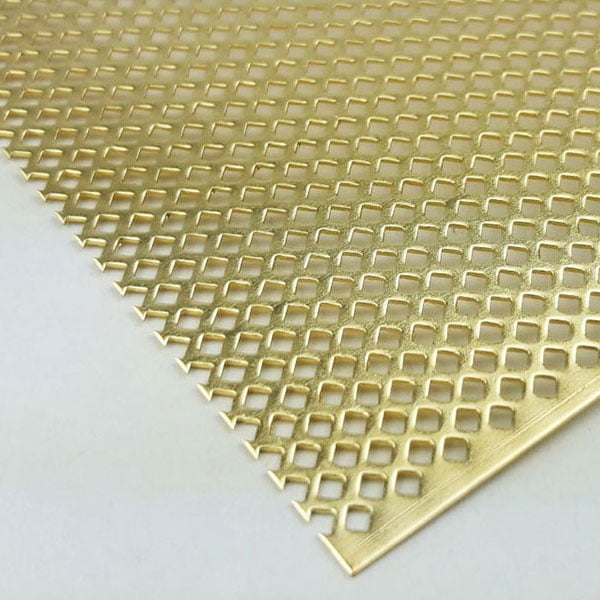
Bronze Expanded Wire Mesh or wire cloth is fabricated using sheets of solid metals from 0.5 mm opening to 50 mm opening in all likely thickness. Expanded Netting is slit and stretched with each stroke of the upper die, forming a raised diamond pattern. Bronze Expanded Wire mesh specification the most versatile mesh uniformly slit and stretched, forming a diamond pattern of openings in the finished sheet and has numerous patterns by using the different molds.
Expanded Metal Mesh is available in numerous shapes but the most common is the diamond shaped aperture fashioned by an expanding machine by using a pressured stretching and slitting process to convert solid metal sheets into expanded mesh. The mesh is slit or perforated from metal sheets and is stretched to form a joint less single piece grill with no interweaves or joints. Since it is manufactured from one single sheet, it is ideal for model making and forming. Expanded Mesh or Expanded Metal Mesh is manufactured within a variety of specifications using different metals to suit a wide range of applications both as filter elements and filter support.
Bronze Expanded Wire Mesh is available in all types of alloys: Bronze, Brass, Bronze, Copper, Hastelloy, Inconel, Iron, Monel 400, Mild Steel, Nichrome A, Nickel, Steel, Stainless Steel, and Stainless Steel Welded.
Bronze Expanded Wire Mesh is available in different sizes and wide-range can be customized to fit your exact specifications in order to meet your specific application requirements.

Features
- Very high strength to weight ratio.
- High tensile strength and can resist vibration.
- Sturdy for multi-purpose applications.
- Excellent finish, high strength, and low maintenance.
- Durable and good strength and toughness.
- Can be easily cut and shaped, and quick to unroll & install.
- Quality Bronze Expanded Wire Mesh Delivered in a roll.
Where it does the work.
Bronze Expanded Wire Mesh is commonly used for fences and grates, sorting in food grain industry, facia processing, gratings and filtration purposes, walkways in railways, pharmaceutical industry, barricades or guards, facades of buildings, chemical industries.
Industries we supply.
FAQs.
All FAQsWhat thickness and width is bronze expanded wire mesh made in?
Bronze expanded wire mesh runs from 0.3 mm to 10.0 mm thick and less than 3000 mm wide. It comes as a coil or as customized sheets. The minimum order is 1 sheet, and the strand is set to your requirement.
What diamond openings can I specify in bronze expanded mesh?
Openings run from 0.5 mm to 50 mm. Listed diamond sizes start at 2*3 mm and include 7*12, 18*30 and 50*100 mm, up to 125*300 mm. Give us the short and long way of the diamond and the strand width.
What is bronze expanded wire mesh used for?
It is used for fences and grates, railway walkways, barricades and guards, and building facades. It also sorts food grain and serves filtration in pharmaceutical and chemical plants. Being one slit and stretched sheet with no joints, it forms well and suits model making.
More in expanded mesh.



Note: Please note that the information on this document is for illustration purposes only as information may vary with individual products, their grade and applications, industries or uses and therefore cannot be guaranteed as accurate.