
Products

Brass Plain Weave Wire Mesh
Brass · Plain Weave
Bronze Plain Weave Wire Mesh
Bronze · Plain Weave
Copper Plain Weave Wire Mesh
Copper · Plain Weave
Hastelloy Plain Weave Wire Mesh
Hastelloy · Plain Weave
Inconel Plain Weave Wire Mesh
Inconel · Plain Weave
Iron Plain Weave Wire Mesh
Iron · Plain Weave
Mild Steel Plain Weave Wire Mesh
Mild Steel · Plain Weave
Monel 400 Plain Weave Wire Mesh
Monel 400 · Plain Weave
Nichrome A Plain Weave Wire Mesh
Nichrome A · Plain Weave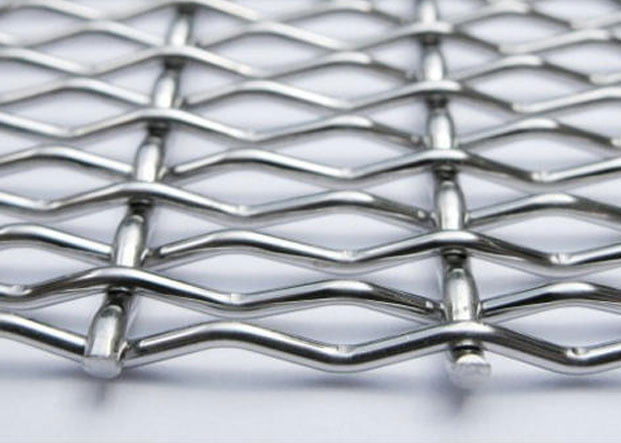
Nickel Plain Weave Wire Mesh
Nickel · Plain Weave
Stainless Steel Plain Weave Wire Mesh
Stainless Steel · Plain Weave
Stainless Steel Welded Plain Weave Wire Mesh
Stainless Steel Welded · Plain WeaveSteel Plain Weave Wire Mesh
Steel · Plain WeaveTitanium Plain Weave Wire Mesh
Titanium · Plain WeaveTungsten Plain Weave Wire Mesh
Tungsten · Plain Weave
No products match.
Features
- Equal strength of warp and weft wires.
- Easily cleanable with identical apertures.
- Biggest open surface among all meshes.
- Durable and good strength and toughness.
- Can be easily cut and shaped, and quick to unroll & install.
- Quality Plain Weave Wire Mesh Delivered in a roll.
Applications
Plain Weave Wire Mesh is extensively used for sieving, particle separation, filtering, safety and equipment protection, window screen, food processing industries, infill panels.
Specifications
- Mesh Size (per inch)
- Very Fine
- Surface Finish
- Mill Finish
- Min order Quantity
- 1 Roll
Industries we supply.
About plain weave wire mesh
Shute wire- Also known as weft wire that runs across mesh width. Warp wire- It runs in the direction of mesh length. Each weft wire goes alternatively over and under each warp wire, and vice versa. Usually the finer plain weave wire mesh weaves are most commonly used in petrochemical and food processing, chemical, plastic production houses, on the other hand, coarser plain weave wire mesh weaves are used for dewatering, sizing, filter cloth and extruding applications. Plain weave wire meshes are available with apertures from 10.7 mm (2 mesh) to 0.05 mm (325 mesh).
Plain Weave Wire Mesh is available in all types of alloys: Aluminium, Brass, Bronze, Copper, Hastelloy, Inconel, Iron, Monel 400, Mild Steel, Nichrome A, Nickel, Steel, Stainless Steel, Stainless Steel Welded, Titanium, and Tungsten.
FAQs.
All FAQsWhat aperture range does plain weave wire mesh cover?
From 10.7 mm (2 mesh) down to 0.05 mm (325 mesh). Each weft wire goes over and under each warp wire in turn, and warp and weft wires usually have the same diameter. That gives identical apertures that are easy to clean.
When should I use fine or coarse plain weave wire mesh?
Finer plain weave suits petrochemical, food processing, chemical and plastics production. Coarser plain weave suits dewatering, sizing, filter cloth and extruding. Pick the mesh count from the particle size you need to pass, then the wire diameter for strength.
Why choose plain weave over other wire mesh weaves?
It has the biggest open surface of all the weaves. Warp and weft wires carry equal strength, and the identical apertures are easy to clean. For finer filtration under pressure, a Dutch weave is the alternative.
What is the difference between warp and shute wires in plain weave mesh?
Warp wires run along the length of the mesh; shute or weft wires run across its width. In plain weave each weft wire passes alternately over and under each warp wire, and vice versa. The two usually share the same diameter.
Note: Please note that the information on this document is for illustration purposes only as information may vary with individual products, their grade and applications, industries or uses and therefore cannot be guaranteed as accurate.